
DOMESTIC MAMMALS
The neocortex of domesticated mammals, such as dogs and cats, exhibit notable differences compared to their non-domesticated counterparts. Domesticated animals have been subject to selective breeding by humans, which has heavily influenced their neocortex development to enhance desirable traits. This factor, accompanied by adaptations to domestic or populated environments, has created unique aspects within the minds of our furry companions!
The dog was the first to be domesticated over fifteen thousand years ago. Animal domestication was a crucial turning point in human history, aiding in the development of today's society. However, it has led to many behavioural, physiological, and cognitive changes within the neocortex of our canine friends. A dog's brain shares the same basic structures as humans but contains aspects unique to the class. The neocortex contains 30% more olfactory receptors than us. With an olfactory bulb forty times the size of humans (proportionately), dogs have a more extensive range in the sense of smell and rely heavily on it.
A well developed ventromedial prefrontal cortex is a distinct feature in dogs, contributing to their high social awareness, and hyper sociality. This portion of the brain is the primary function of one of the most remarkable morphological abilities of domestic mammals, their ability to interpret human social cues, facial expression, and tone of voice. Dogs can distinguish between words they have heard before, and words they haven’t. Furthermore, instead of understanding that a word they haven’t heard before has no meaning, they instead try to understand what the human is trying to communicate.
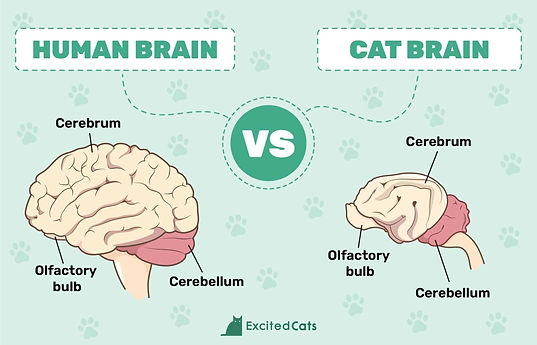
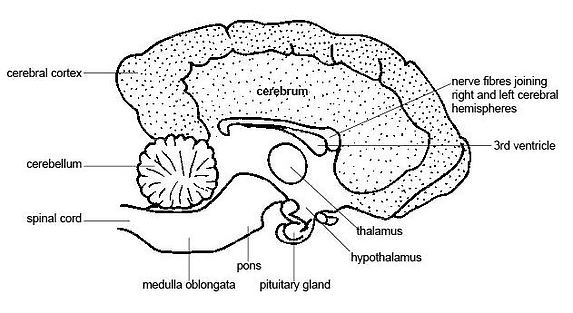
While cats have a smaller neocortex than the rest of their brain's size, and less cortical folding, they still have the same primary structures as humans and dogs, and do not rank any lower in intelligence.
Domestic felines have developed pathways different from humans. Cats have features like whiskers that stimulate the somatofactory cortex when touched or brushed against an object, giving them the ability to see with their whisker in pitch black conditions. Their insular cortex is highly developed, providing cats with sensitive hearing for hunting small prey, and an advanced visual cortex gives cats the ability to see in low light.
Similar to dogs, cats have a much larger olfactory bulb than humans, relying on their extensive range of smell. Cats also recognize facial expressions, tones of voice, and behaviours. Cats use this understanding and communicate towards humans through mimicry. A domestic cats only meow is said to be mimicking the ries of a human baby, in an attempt to get your attention.